

[2026] Mule-Dev-201 Dumps are Available for Instant Access
Valid Mule-Dev-201 Dumps for Helping Passing Mule-Dev-201 Exam!
NEW QUESTION # 39
Refer to the exhibit.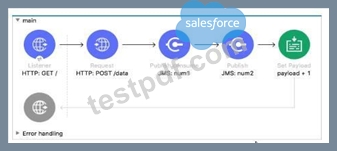
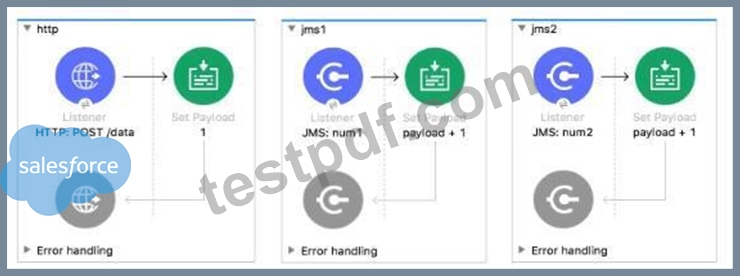

What payload is returned from a request to http//localhost.8081/
Refer
to the exhibits, what payload is returned from a request to http://localhost;8081/?
- A. 0
- B. 1
- C. 2
- D. 3
Answer: C
Explanation:
The flow can be described asbelow. 1) First HTTP POST requets is made in which paylaod is set to 1 and it gets returned to our mail flow. 2) Second call is initiated for JMS Publish Consume JMS: num1 which add 1 to the payload which makes it as 2. Note that pubih consume is a synchronous operation. Hence paylaod is returned to main flow. 3) Third call is initiated for JMS Publish JMS: num2 which add 1 to the payload . Note that pubih is asynchronous operation. Hence paylaod is never returned to main flow. So payload in main flow is still 2. 4) Finally Set Payload increments payload by 1 making payload as 3 which is returned by the flow.
Hence option 3 is the correct answer.
NEW QUESTION # 40
What is the default port used by Mule application debugger configuration in AnypointStudio?
- A. 0
- B. 1
- C. 2
- D. 3
Answer: C
Explanation:
By default, Debugger listens for incoming TCP connections on localhost port 6666 You can change this in a project's run configuration.
MuleSoft Doc Ref : https://docs.mulesoft.com/studio/7.5/visual-debugger-concept
NEW QUESTION # 41
Which of the below is used by Mule application to manage dependencies which make sharing the projects lightweight and easier?
- A. POM.xml
- B. Configuration file
- C. Global element
- D. Cloudhub
Answer: A
Explanation:
POM.xml contains info about the project and configurationn details used by Maven to build the project
NEW QUESTION # 42
Which keyword do you use to create a new function in DataWeave?
- A. function
- B. map
- C. func
- D. fun
Answer: D
Explanation:
You can define your own DataWeave functionsusing the fun declaration in the header of a DataWeave script.
Sample is as below. ----------------------------------------
%dw 2.0
output application/json
fun toUpper(aString) = upper(aString)
---
toUpper("hello")
MuleSoft Doc Ref : https://docs.mulesoft.com/mule-runtime/4.1/dataweave-functions
NEW QUESTION # 43
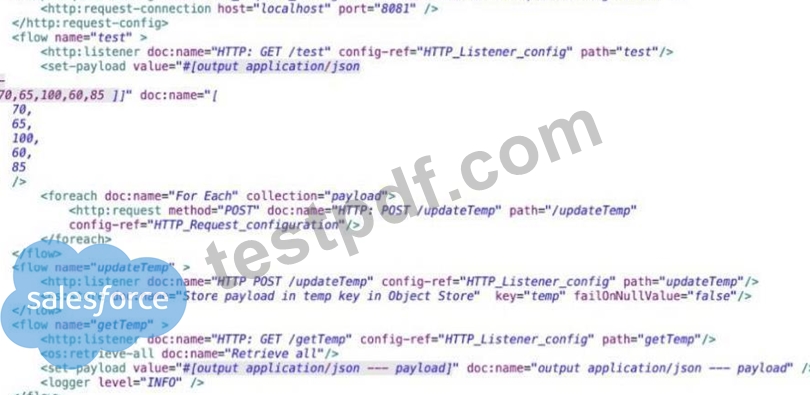
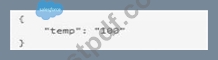
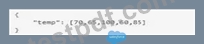
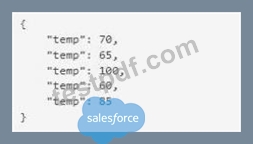
A web client sends one GET request to the test flow's HTTP Listener, which causes the test flow to call the updateTemp flow After the test flow returns a response, the web client then sends a different GET request to trie getTemp flow's HTTP Listener The test flow is not called a second time.
What response is returned from the request to the getTemp flow's HTTP Listener?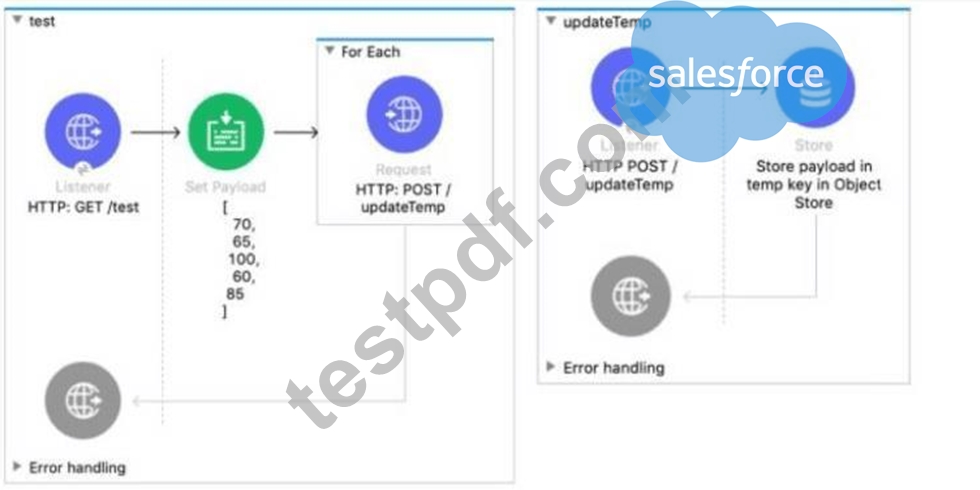

- A.

- B.
- C.
- D.
Answer: A
NEW QUESTION # 44
Why would a Mule application use the ${http.port} property placeholder for its HTTP Listener port when it is deployed to CloudHub?
- A. Allows clients to VPN directly to the application at the Mule application's configured HTTP port
- B. AllowsCloudHub to automatically change the HTTP port to allow external clients to connect to the HTTP Listener
- C. Allows MuleSoft Support to troubleshoot the application by connectingdirectly to the HTTP Listener
- D. Allows CloudHub to automatically register the application with API Manager
Answer: B
Explanation:
This helps CloudHub to dynamically allocates a port at deployment time.
MuleSoft Doc Ref : https://docs.mulesoft.com/mule-runtime/4.3/deploy-to-cloudhub#prerequisites Reference:https://docs.mulesoft.com/runtime-manager/developing-applications-for-cloudhub
NEW QUESTION # 45
In the Database On Table Row operation, what does the Watermark column enable the On Table Row operation to do?
- A. To delete the most recent records retrieved from a database to enable database caching
- B. To avoid duplicate processing of records in a database.
- C. To enable duplicate processing of records in a database
- D. To save the most recent records retrieved from a database to enable database caching
Answer: B
Explanation:
The correct answer is To avoid duplicate processing of records in a database.
If a watermark column is provided, the values taken from that column are used to filter the contents of the next poll, so that only rows with a greater watermark value are returned. If an ID column is provided, this component automatically verifies that the same row is not picked twice by concurrent polls.
Mule doc reference : https://docs.mulesoft.com/db-connector/1.8/database-documentation#listener
NEW QUESTION # 46
Refer to the exhibits.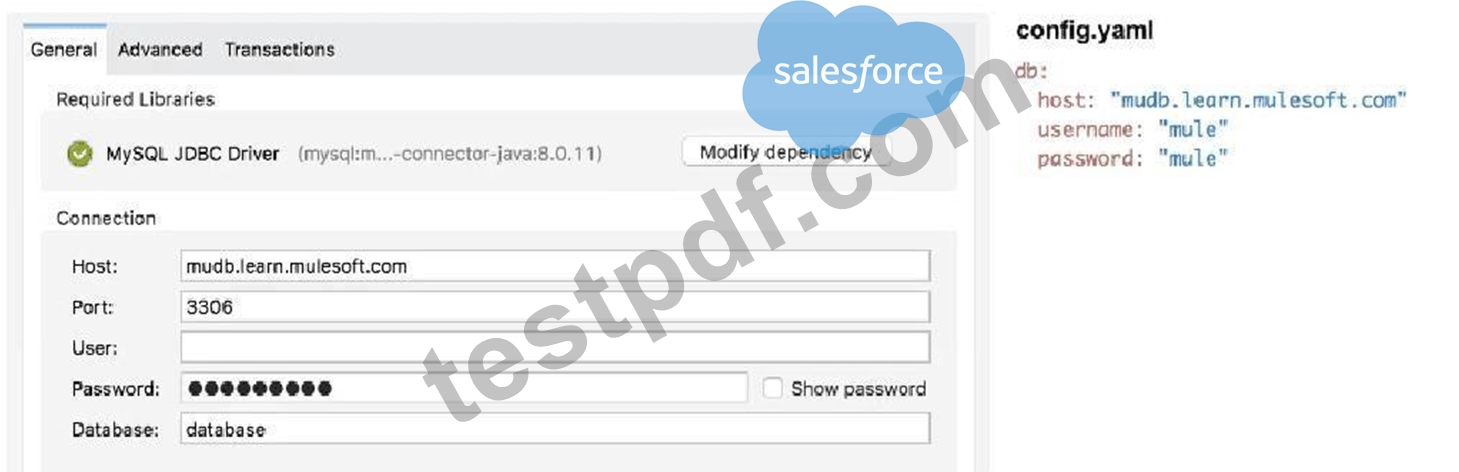
What is valid text to set the field in the Database connector configuration to the username value specified in the config.yaml file?
- A. ${db:username>
- B. #[db.username]
- C. #[db:username]
- D. ${db.username>
Answer: D
Explanation:
option 3 is the correct syntz to access application properties
NEW QUESTION # 47
A
web client submits a request to http://localhost:8081?accountType=personal. The query parameter is captured using a Set Variable transformer to a variable named accountType.
What is the correct DataWeave expression to log accountType?
- A. Account Type: # [attributes.accountType]
- B. Account Type: #[flowVars.accountType]
- C. Account Type: #[message.inboundProperties.accountType]
- D. Account Type: #[vars.accountType]
Answer: D
Explanation:
vars: Keyword for accessing a variable, for example, through aDataWeave expression in a Mule component, such as the Logger, or from an Input or Output parameter of an operation. If the name of your variable is myVar, you can access it like this: vars.myVar Hence correct answer is Account Type: #[vars.accountType]
NEW QUESTION # 48
According to MuleSoft, what is the Center for Enablement's role in the new IT operating model?
- A. Implements line of business projects to enforce common security requirements
- B. Centrally manages partners and consultants to implement line of business projects
- C. Creates and manages discoverable assets to be consumed by line of business developers
- D. Implements line of business projects to enforce common security requirements
Answer: C
Explanation:
Correct answer is Creates and manages discoverable assets to be consumedby line of business developers.
C4E does not get directly involved in projects.
NEW QUESTION # 49
How are query parameters dynamically passed to an outbound REST request using an HTTP Request operation?
- A. As query parameters in the HTTP Request operation
- B. As flow variables
- C. In the Mule event's payload
- D. As URI parameters in the HTTP Request operation
Answer: A
Explanation:
In General > Request > Query Parameters, click theplus icon (+) to add a parameter to a request. Type a name and value for the parameter or use a DataWeave expression to define the name and value.
Graphical user interface, text, application, email Description automatically generated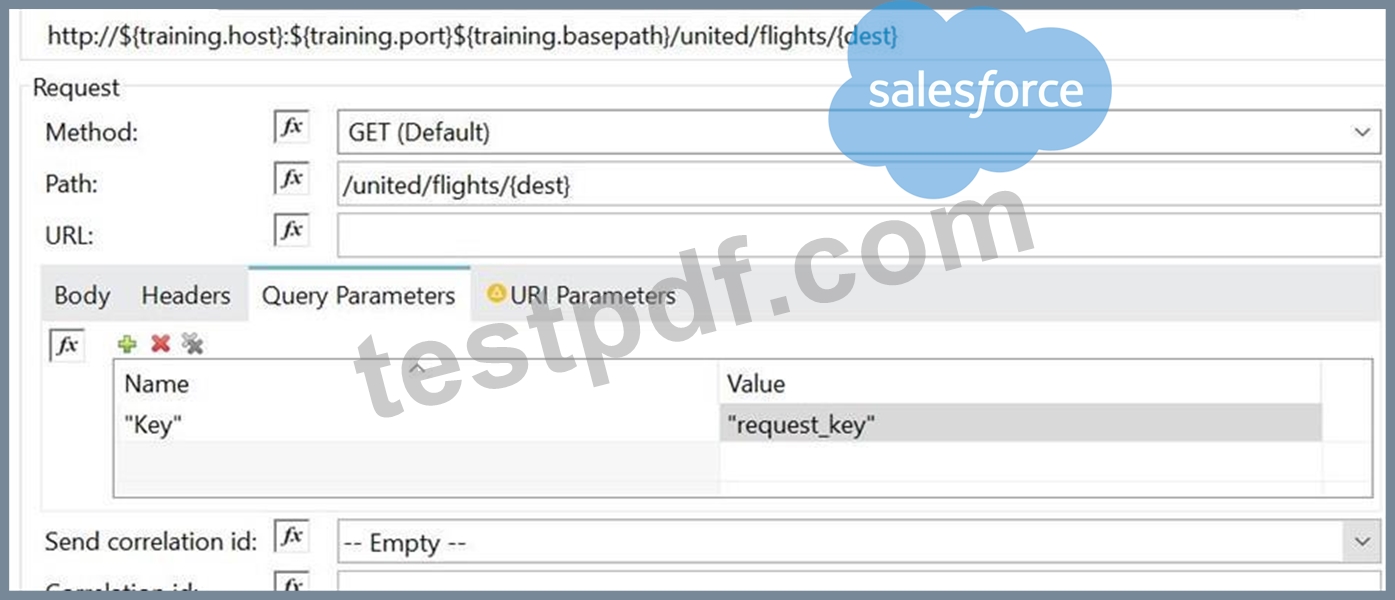
NEW QUESTION # 50
Refer to the exhibit. APIkit is used to generate flow components for the RAML specification.
How many apikit:router XML elements are generated to handle requests to every endpoint defined in the RAML specification?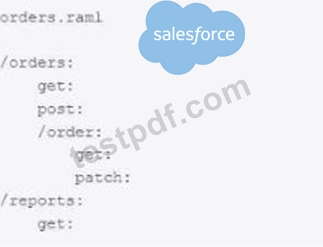
- A. 0
- B. 1
- C. 2
- D. 3
Answer: B
NEW QUESTION # 51
Refer to theexhibits. In the choice router, the When expression for the domestic shipping route is set to "#
[payload= "FR"]".
What is the output of logger after the execution of choice router is completed?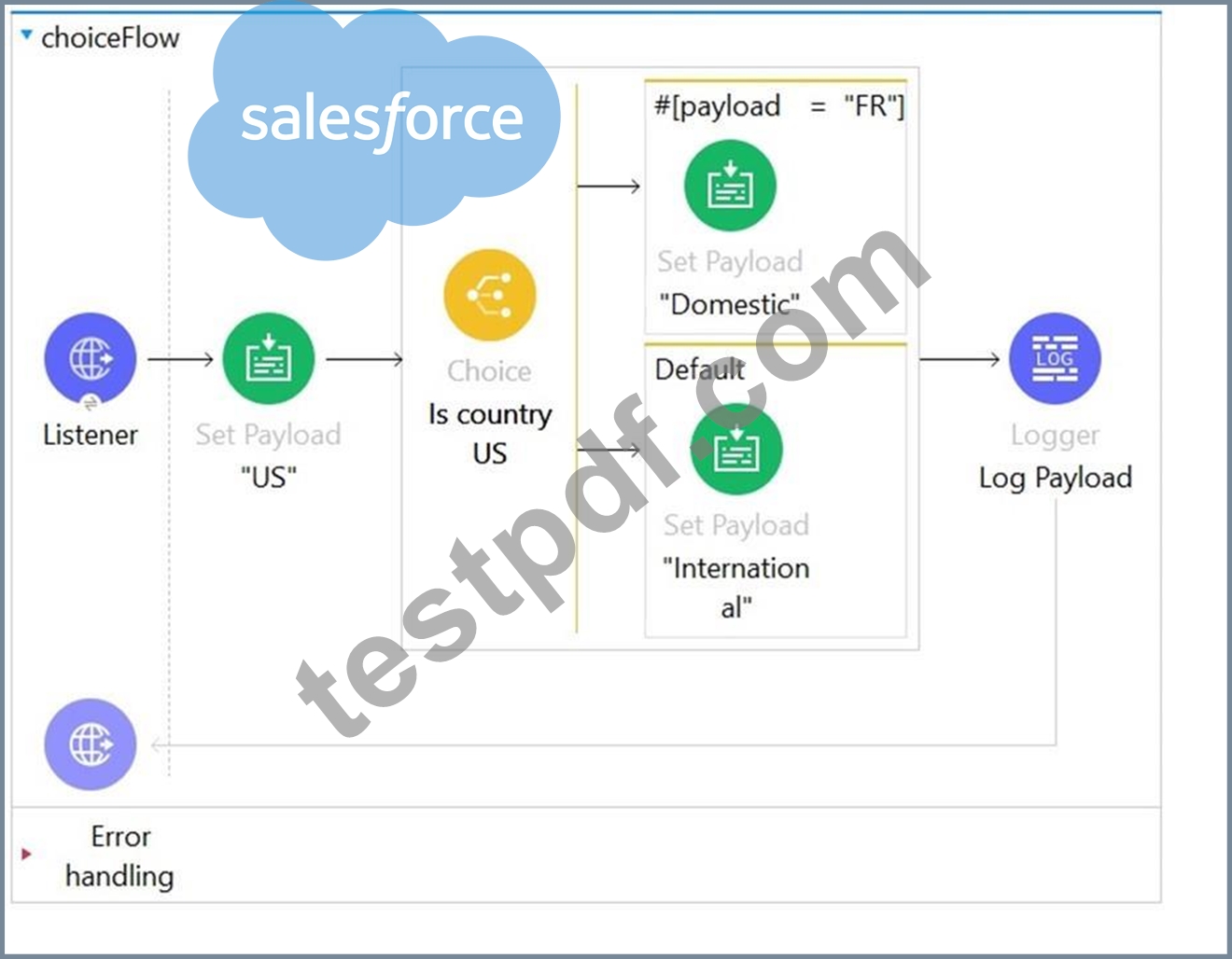
- A. "US"
- B. "International"
- C. A dataweave syntax error
- D. "Domestic"
Answer: C
Explanation:
To compare, DataWeave syntax is #[payload == "FR"].
In this case only one = is used so it will give syntax error.
Hence the correct answer is A dataweave syntax error
NEW QUESTION # 52
Refer to the exhibit.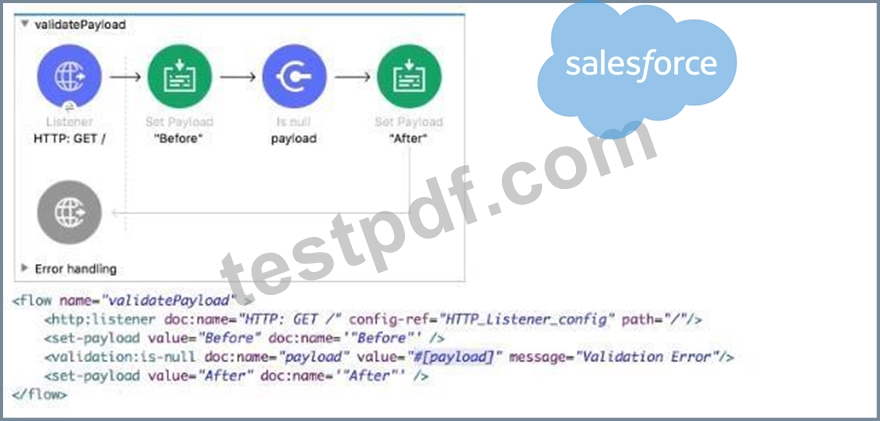
What
is the response to a web client request tohttp://localhost:8081?
- A. Validation Error
- B. After
- C. before
- D. null
Answer: A
Explanation: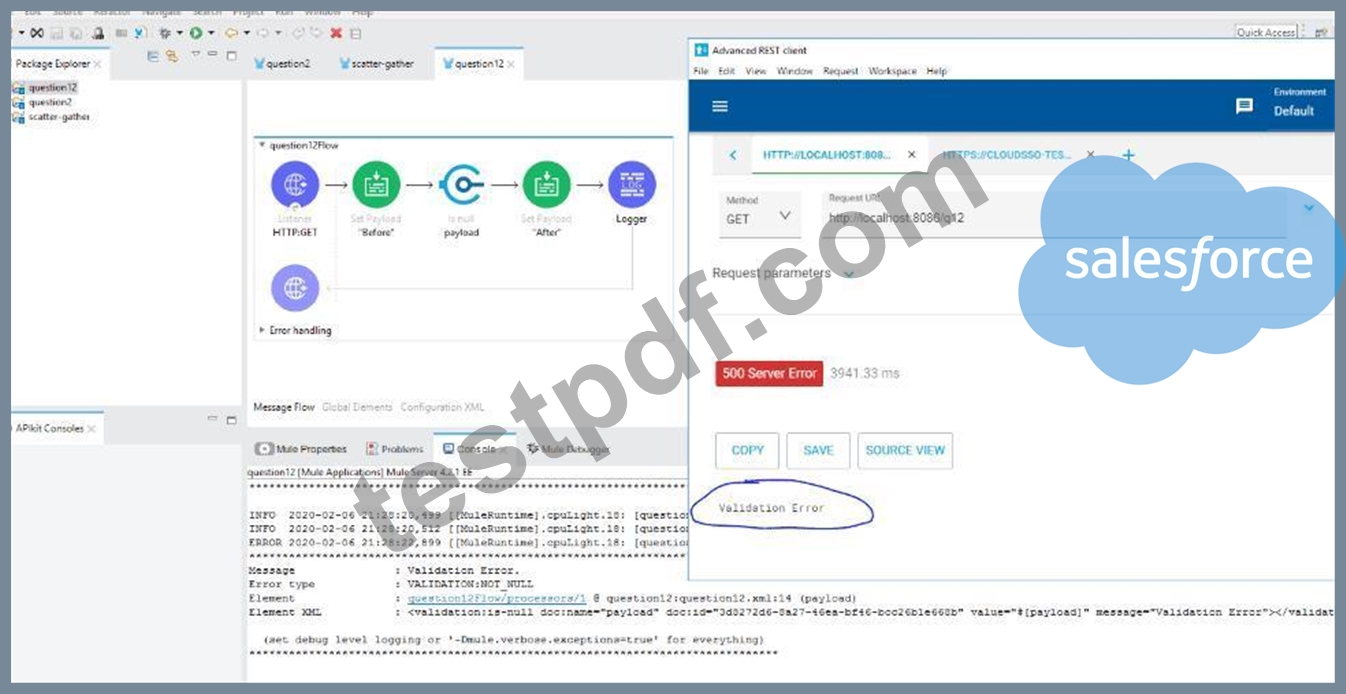
NEW QUESTION # 53
Refer to the exhibits.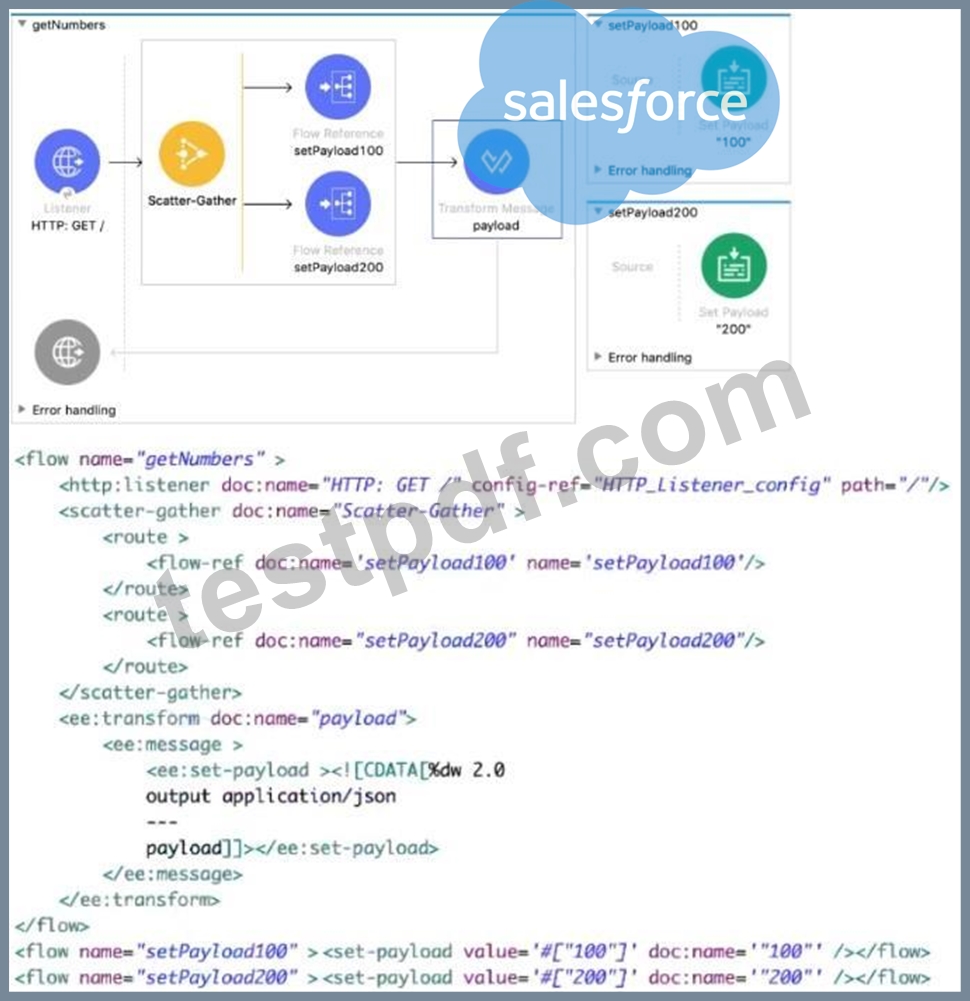
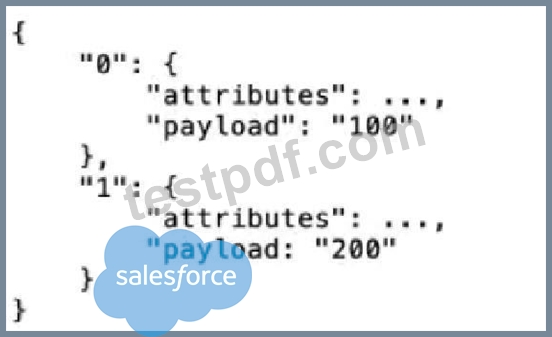
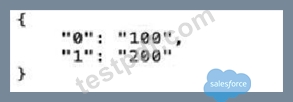
Each route in the Scatter-Gather sets the payload to the number shown in the label. Whatresponse is returned to a web client request to the HTTP Listener?
- A.
- B.
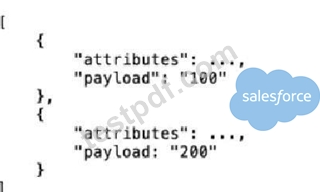
- C.

- D.
Answer: A
Explanation:
Correct answer is as below.After all processing routes have finished execution, the Scatter-Gathercomponent creates a new Mule event that combines all resulting Mule events from each route, and then passes the new Mule event to the next component in the flow.
{
"0": {
"attributes": ...,
"payload": "100"
},
"1": {
"attributes": ...,
"payload": "200"
}
}
Bottom of Form
NEW QUESTION # 54
Refer to the exhibits.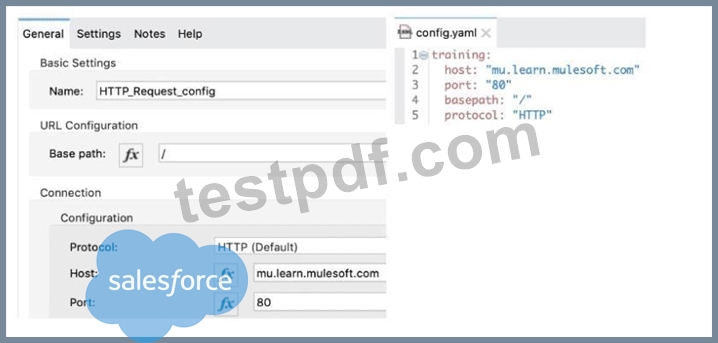
A Mule application has an HTTP Request that is configured with hardcoded values. To change this, the Mule application is configured to use a properties file named config.yaml.
what valid expression can the HTTP Request host value be set to so that it is no longer hardcoded?
- A. ${training.host}
- B. ${training:host}
- C. #[training.host]
- D. #[training:host]
Answer: A
Explanation:
Correct answer is ${training.host}
---------------------------------------------------------------------------------------------------------------------------------------- How to Configure Properties to Mule 4.X Platform?
1) Go to /src/main/resources project directory.
2) Create aconfiguration file with the name configuration.yaml inside the newly created config folder.
Graphical user interface, application, Word Description automatically generated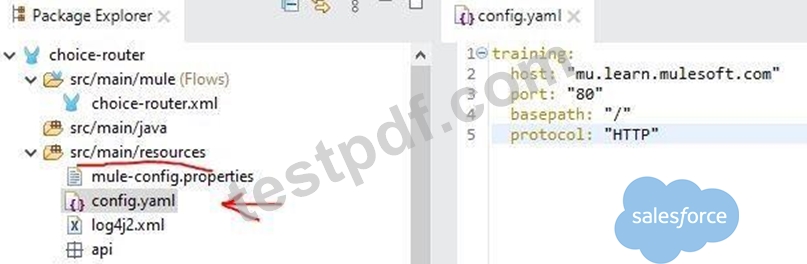
3) Go To Project > Global Element > Create > General >select the configuration.yaml file create in step- 2) Graphical user interface, application Description automatically generated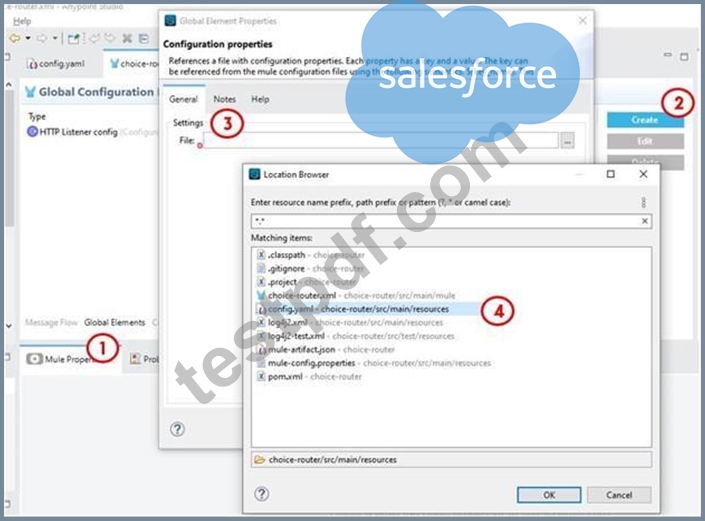
4) To verify develop a simple flow with HTTP listener which has above entries. Put the logger that prints the values on console.
Graphical user interface, application Description automatically generated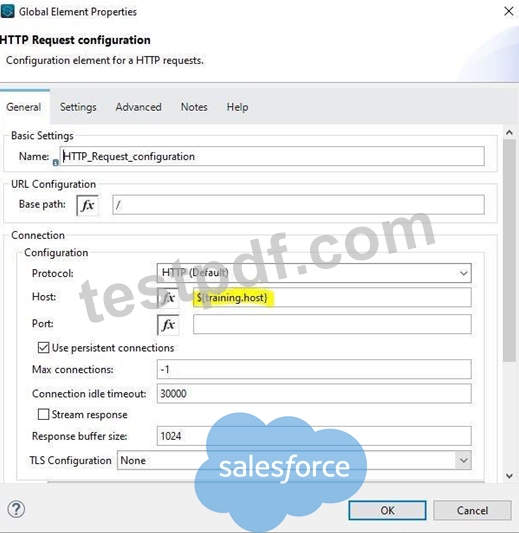
5) Additional info: Similarly, when you want to access this port in DataWeave you need to use p function Graphical user interface, text, application, email Description automatically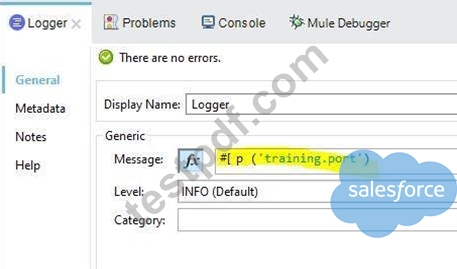
generated
NEW QUESTION # 55
What are the latest specification of RAML available?
- A. 1.2
- B. 0.8
- C. 0
- D. 1
Answer: C
Explanation:
The current version of the RAML specification is 1.0
You can check RAML version in RAML definition by referring tofirst comment. See highlighted part in below image.
Graphical user interface, text, application, email Description automatically generated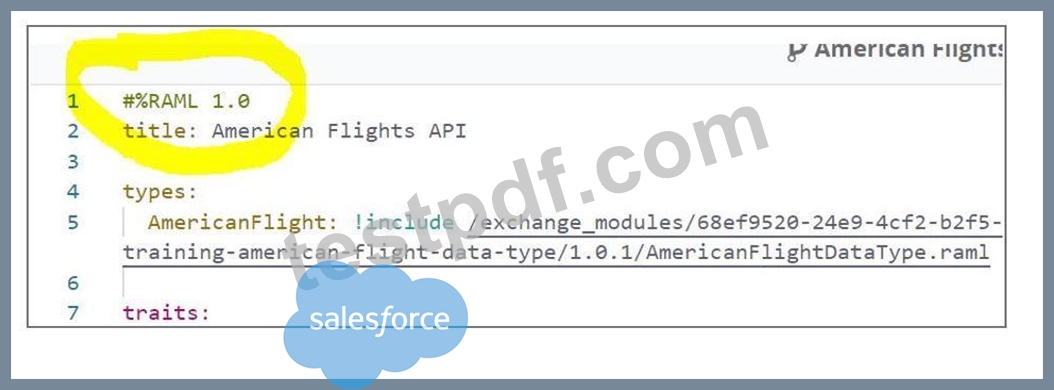
NEW QUESTION # 56
What isthe purpose of the api:router element in APIkit?
- A. Creates native connectors using a 3rd party Java library
- B. Validates requests against RAML API specifications and routes them to API implementations
- C. Serves as an API implementation
- D. Validatesresponses returned from API requests and routes them back to the caller
Answer: B
Explanation:
The APIkit Router is a key message processor that validates requests against the provided definition, enriches messages (for example by adding default values to the messages) and routes requests to a particular flow.
Also, the Router raises errors messages if errors occurs while routing, validating or processing the user request.
NEW QUESTION # 57
Refer to the exhibits.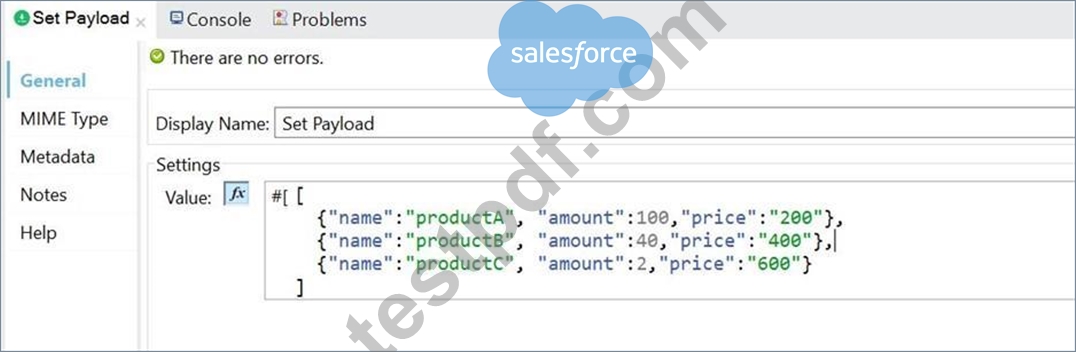
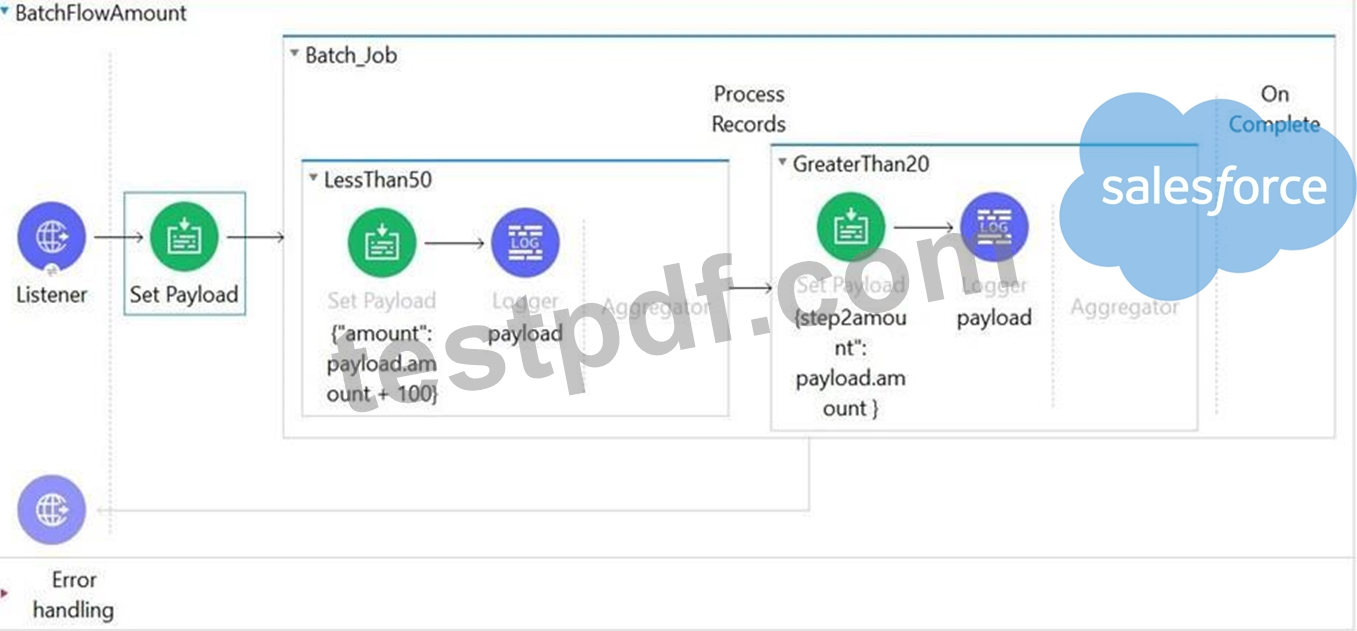
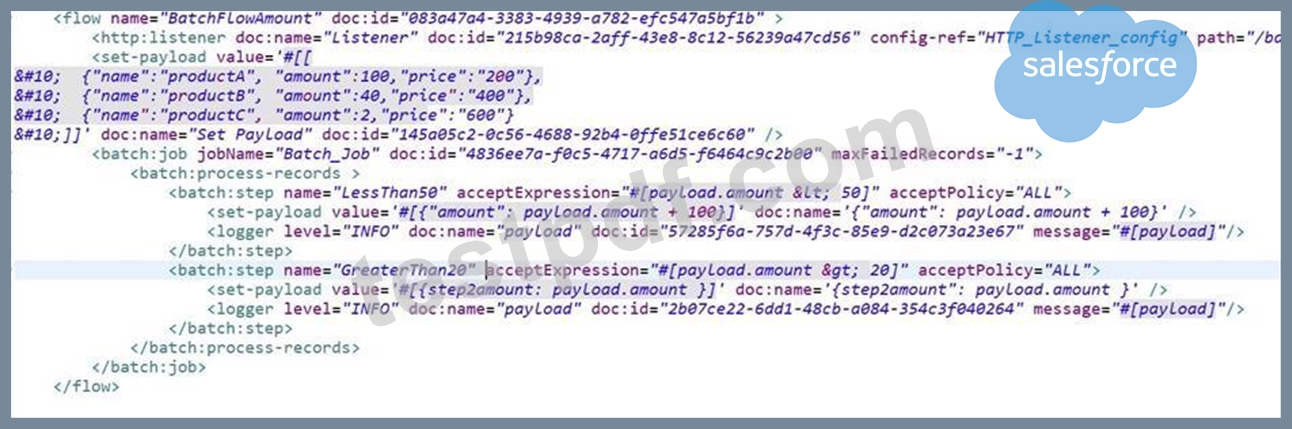
The Batch Job scope contains two Batch Steps scopes with different accept expression.
The input payload is passed to the Batch Job scope.
After the entire payload is processed by the batch job scope , what messages have been logged by the Logger component?
- A. 1.{amount=140}2.{amount=102}3.{step2amount=100}4.{step2amount=140}
- B. 1.{amount=140}2.{amount=102}3.{step2amount=100}
- C. 1.{amount=140}2.{amount=102}3.{step2amount=100}4.{step2amount=140}5.{step2amount=102}
- D. 1.{amount=140}2.{amount=102}3.{step2amount=100}4.{step2amount=40}
Answer: C
Explanation:
This question validates you knowledge on Batch Processing. Before we analyze the question , lets revise a bit about batchfilters.
Batch Filters
You can apply one or more filters as attributes to any number of batch steps.Imagine a batch job whose first batch step checks if a Salesforce contact exists for a record, and a second batch step that updates each existing Salesforce contact with new information. You can apply a filter to the second batch step to ensure it only processes records that didn't fail during the first batch step.By having batch steps accept only some records for processing, you streamline the batch job sothe Mule runtime engine can focus only on the relevant data for a particular batch step.
A batch step uses two attributes to filter records:
acceptExpression
acceptPolicy
Each batch step can accept one acceptExpression and one acceptPolicy attributes to filter records.
Use the acceptExpression attribute to process only records that evaluate to true; if the record evaluates to false, the batch step skips the record and sends it to the next one. In other words, the records with an accept expression that resolves to false are the ones that Mule filters out.
The example below filters out all records where the age is less than 21; the batch step does not process those records.
* <batch:jobjobName="batchJob">
* <batch:process-records>
* <batch:stepname="adultsOnlyStep"acceptExpression="#[payload.age >21]">
* ...
* </batch:step>
* </batch:process-records>
* </batch:job>
Mule Ref Doc : Refining Batch StepsProcessing | MuleSoft Documentation
As we are clear with above concepts , now lets understand this solution step by step.
1) Batch Step (Less than 50)
Accept expression for this batch step is less than 50. Hence elements which will go in this batch step are amount value 40 and 2. Hence output of logger in first batch step is
{amount=140}
{amount=102}
2) Batch Step (Greater than 20)
Accept condition for this batch step is greater than 20. Note that input amount values for this batch step are
100 , 140 and102 (last two values have been updated in batch step less than 50) As all values satisfy this condition out put of second logger is
{step2amount=100}
{step2amount=140}
{step2amount=102}
Hence correct answer to this question is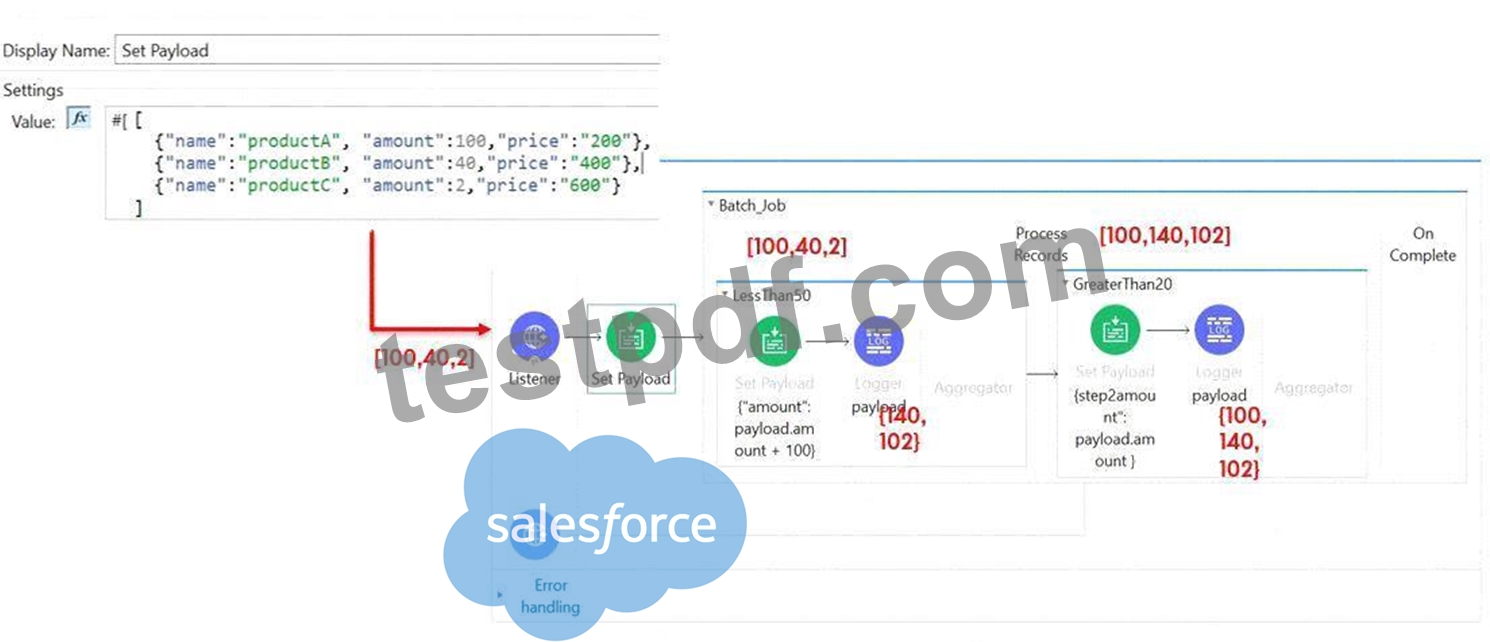
* {amount=140}
* {amount=102}
* {step2amount=100}
* {step2amount=140}
* {step2amount=102}
2) Batch Step (Greater than 20)
Accept condition for this batch step is greater than 20. Note that input amount values for this batch step are
100 , 140 and 102 (last two values have been updated inbatch step less than 50) As all values satisfy this condition out put of second logger is
{step2amount=100}
{step2amount=140}
{step2amount=102}
Hence correct answer to this question is
{amount=140}
{amount=102}
{step2amount=100}
{step2amount=140}
{step2amount=102}
NEW QUESTION # 58
......
Updated Mule-Dev-201 Dumps Questions For Salesforce Exam: https://www.testpdf.com/Mule-Dev-201-exam-braindumps.html
UPDATED Salesforce Mule-Dev-201 Exam Questions & Answer: https://drive.google.com/open?id=11b6ybpMdrVbiFdjFVCaKMP82Kvh0zIeF
