

Latest Jan 11, 2022 CKA Brain Dump: A Study Guide with Tips & Tricks for passing Exam
CKA Question Bank: Free PDF Download Recently Updated Questions
Linux Foundation CKA Exam Syllabus Topics:
| Topic | Details |
|---|---|
| Topic 1 |
|
| Topic 2 |
|
| Topic 3 |
|
| Topic 4 |
|
| Topic 5 |
|
| Topic 6 |
|
| Topic 7 |
|
| Topic 8 |
|
| Topic 9 |
|
| Topic 10 |
|
| Topic 11 |
|
| Topic 12 |
|
NEW QUESTION 29
List all persistent volumes sorted by capacity, saving the full kubectl output to
/opt/KUCC00102/volume_list. Use kubectl 's own functionality for sorting the output, and do not manipulate it any further.
Answer:
Explanation:
See the solution below.
Explanation
solution
F:\Work\Data Entry Work\Data Entry\20200827\CKA\2 C.JPG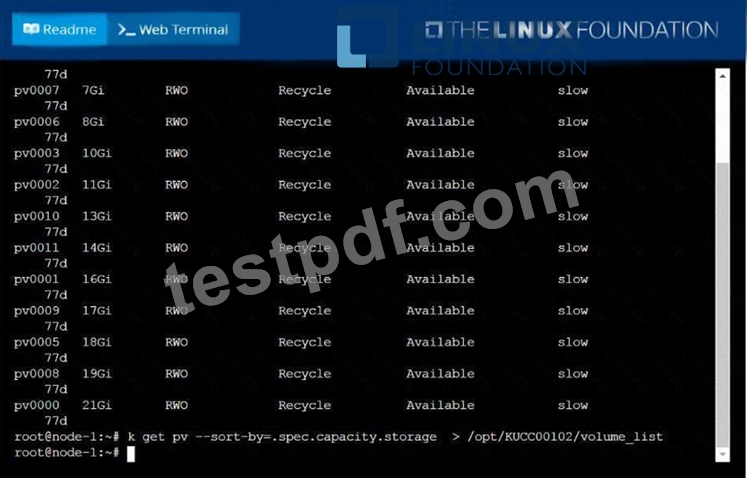
NEW QUESTION 30
Set the node named ek8s-node-1 as unavailable and reschedule all the pods running on it.
Answer:
Explanation:
See the solution below.
Explanation
solution
F:\Work\Data Entry Work\Data Entry\20200827\CKA\19 B.JPG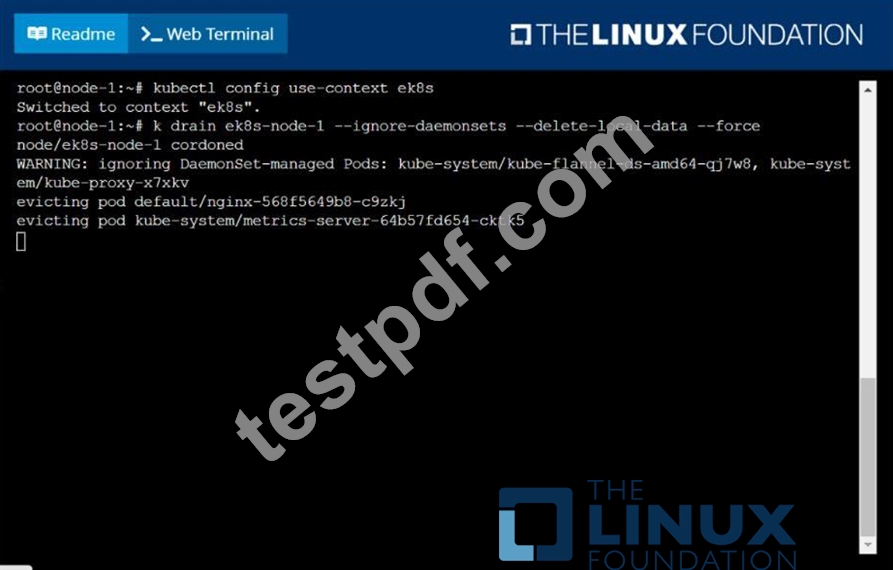
NEW QUESTION 31
Create and configure the service front-end-service so it's accessible through NodePort and routes to the existing pod named front-end.
Answer:
Explanation:
See the solution below.
Explanation
solution
F:\Work\Data Entry Work\Data Entry\20200827\CKA\8 B.JPG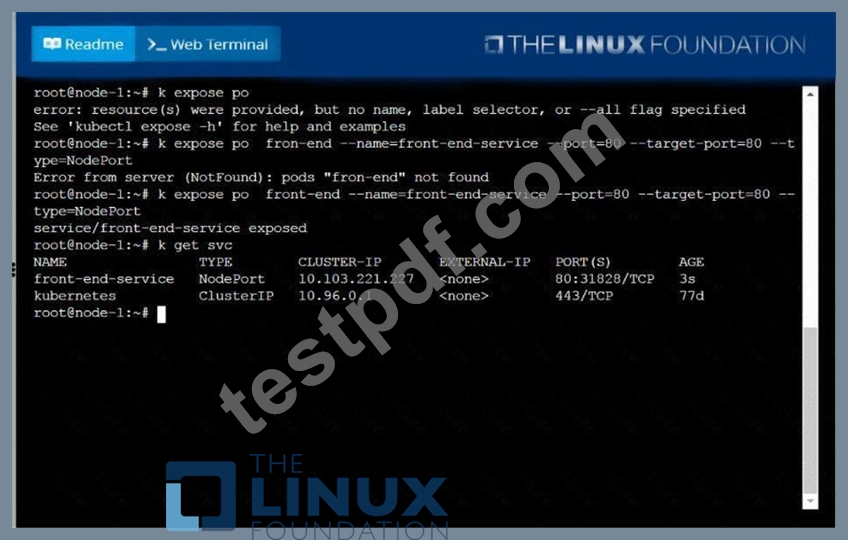
NEW QUESTION 32
Create and configure the service front-end-service so it's accessible through NodePort and routes to the existing pod named front-end.
Answer:
Explanation:
See the solution below.
Explanation
solution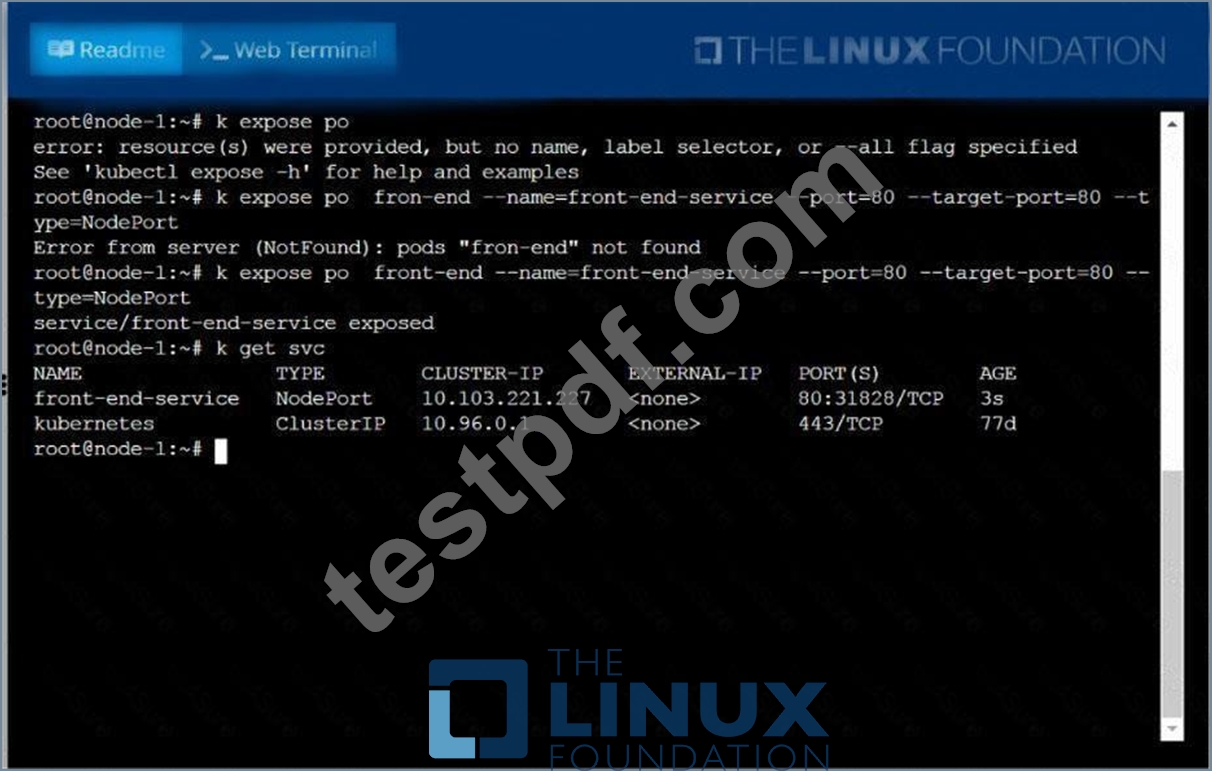
NEW QUESTION 33
Check to see how many worker nodes are ready (not including nodes tainted NoSchedule) and write the number to /opt/KUCC00104/kucc00104.txt.
Answer:
Explanation:
See the solution below.
Explanation
solution
F:\Work\Data Entry Work\Data Entry\20200827\CKA\15 B.JPG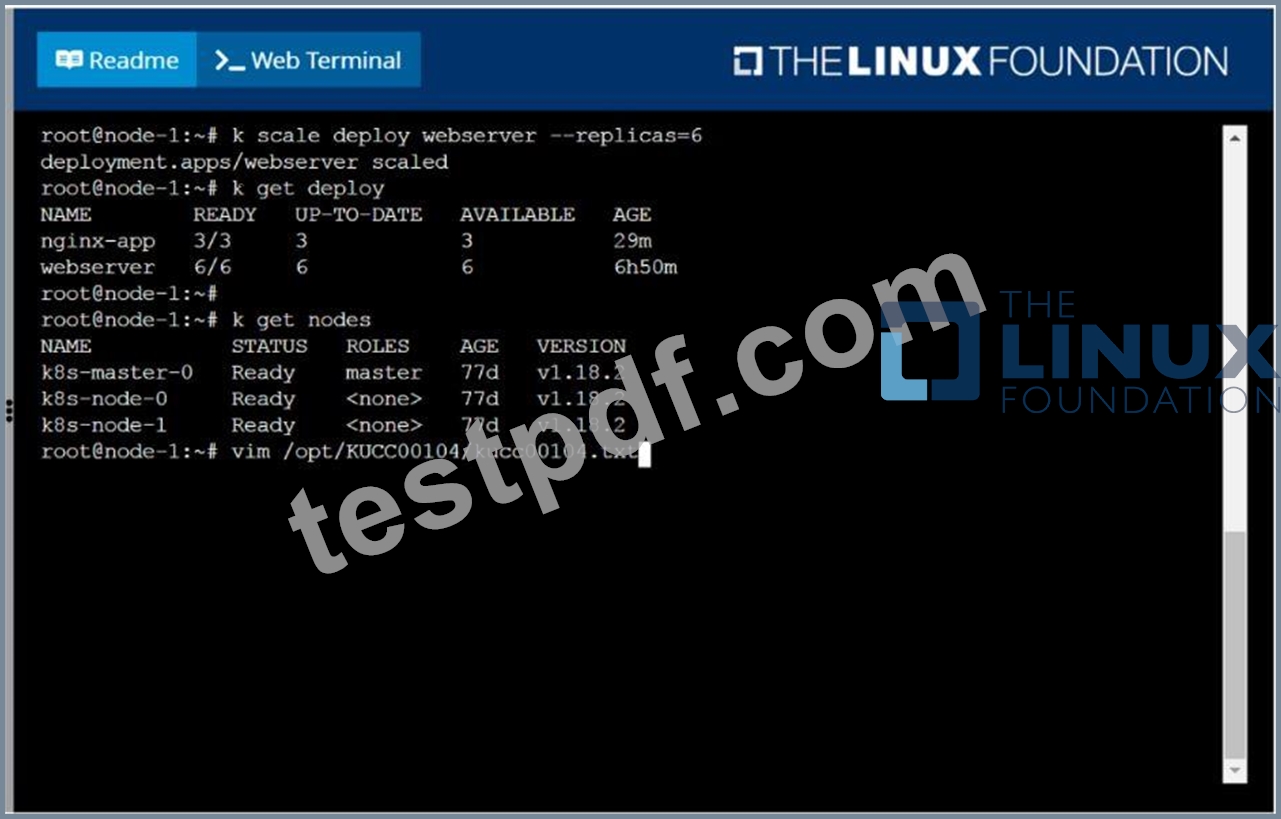
F:\Work\Data Entry Work\Data Entry\20200827\CKA\15 C.JPG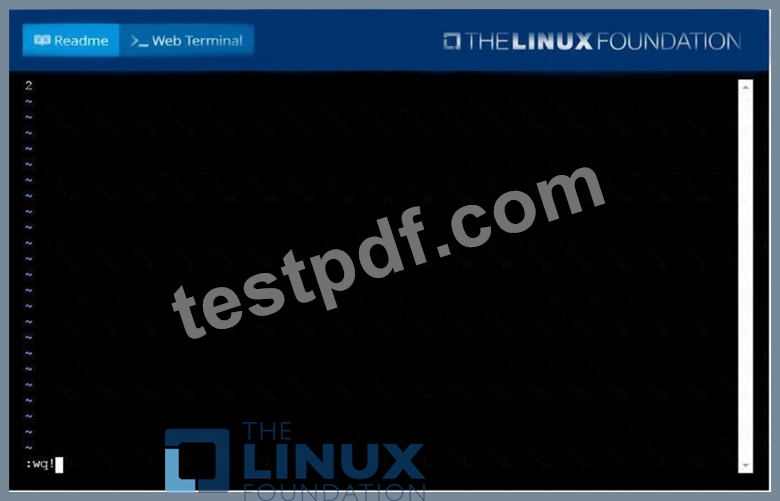
NEW QUESTION 34
From the pod label name=cpu-utilizer, find pods running high CPU workloads and write the name of the pod consuming most CPU to the file /opt/KUTR00102/KUTR00102.txt (which already exists).
Answer:
Explanation:
See the solution below.
Explanation
solution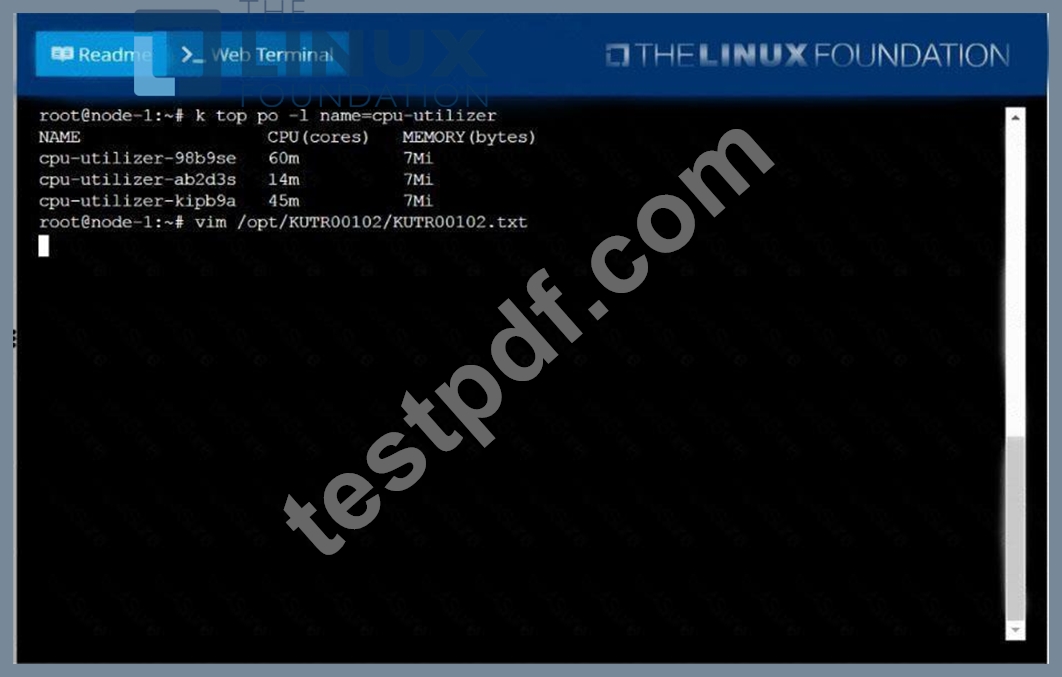
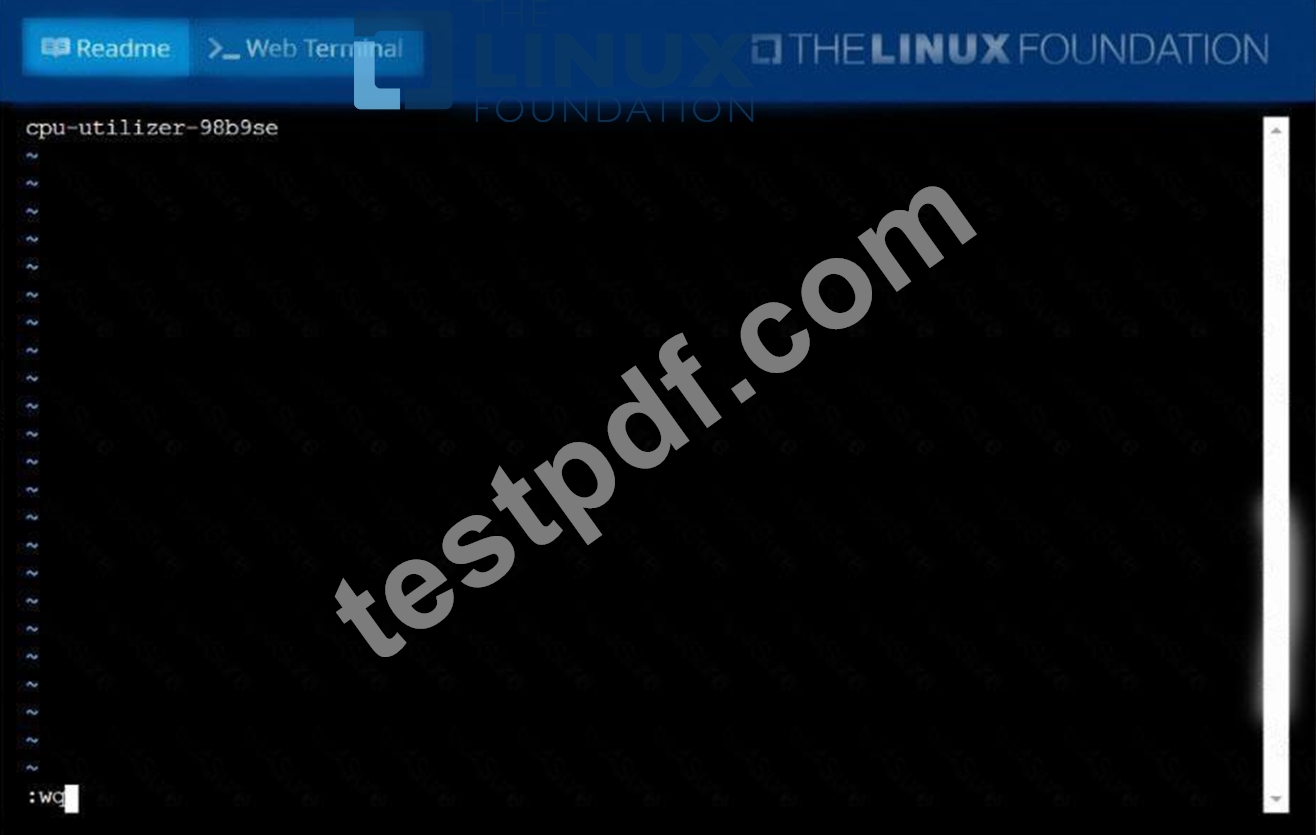
NEW QUESTION 35
List all configmap and secrets in the cluster in all namespace and write it to a file /opt/configmap-secret
Answer:
Explanation:
kubectl get configmap,secrets --all-namespaces > /opt/configmap-secret // Verify Cat /opt/configmap-secret
NEW QUESTION 36
Undo/Rollback deployment to specific revision "1"
- A. // Check Deployment History
kubectl rollout history deployment webapp
//Rollback to particular revision
kubectl rollout undo deploymet webapp --to-revision=1 - B. // Check Deployment History
kubectl rollout history deployment webapp
kubectl rollout undo deploymet webapp --to-revision=1
Answer: A
NEW QUESTION 37
Scale the deployment to 5 replicas
Answer:
Explanation:
kubectl scale deployment webapp -replicas=5 //Verify kubectl get deploy kubectl get po,rs
NEW QUESTION 38
Check the Image version of nginx-dev pod using jsonpath
Answer:
Explanation:
See the solution below.
Explanation
kubect1 get po nginx-dev -o
jsonpath='{.spec.containers[].image}{"\n"}'
NEW QUESTION 39
Create a pod as follows:
* Name: mongo
* Using Image: mongo
* In a new Kubernetes namespace named
Answer:
Explanation:
See the solution below.
Explanation
solution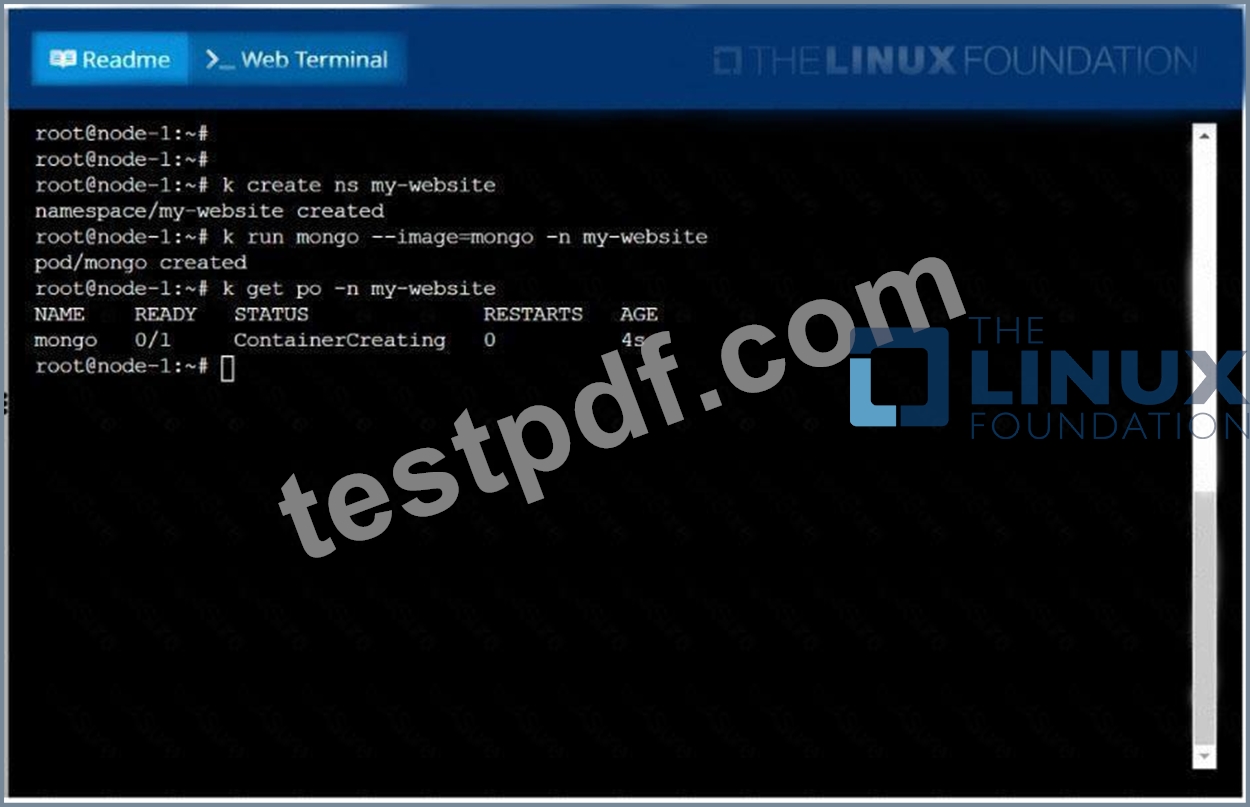
NEW QUESTION 40
Get the DNS records for the service and pods for the deployment redis and the put the value in /tmp/dnsrecordpod and /tmp/dnsrecord-service
- A. // Get Pod Ip
kubectl get po -o wide
// Get Service Name
kubectl get svc
// Create a temporary pod and execute nslookup command
Note: POD IP format should be a-b-c-d and not a.b.c.d
kubectl run busybox --image=busybox:1.28 --restart=Never -
-rm -it -- nslookup 192-168-0-69.default.pod >
/tmp/dnsrecord-pod
kubectl run busybox1 --image=busybox:1.26 --restart=Never
--rm -it -- nslookup redis-service > /tmp/dnsrecordservice
//Verify
cat /tmp/dnsrecord-pod
Server: 10.2.8.10
Address 1: 10.2.0.10 kube-dns.kube system.svc.cluster.local Name: 192-168-0-69.default.pod Address 1: 192.168.0.69 192-166-0-69.redis service.default.svc.cluster.local cat /tmp/dnsrecord-pod Server: 10.2.0.10 Address 1: 10.2.0.10 kube-dns.kube system.svc.cluster.local Name: 192-168-0-69.default.pod Address 1: 192.168.0.69 192-168-0-69.redis service.default.svc.cluster.local - B. // Get Pod Ip
kubectl get po -o wide
// Get Service Name
kubectl get svc
// Create a temporary pod and execute nslookup command
Note: POD IP format should be a-b-c-d and not a.b.c.d
kubectl run busybox --image=busybox:1.28 --restart=Never -
-rm -it -- nslookup 192-168-0-69.default.pod >
/tmp/dnsrecord-pod
kubectl run busybox1 --image=busybox:1.28 --restart=Never
--rm -it -- nslookup redis-service > /tmp/dnsrecordservice
//Verify
cat /tmp/dnsrecord-pod
Server: 10.2.0.10
Address 1: 10.2.0.10 kube-dns.kube system.svc.cluster.local Name: 192-168-0-69.default.pod Address 1: 192.168.0.69 192-168-0-69.redis service.default.svc.cluster.local cat /tmp/dnsrecord-pod Server: 10.2.0.10 Address 1: 10.2.0.10 kube-dns.kube system.svc.cluster.local Name: 192-168-0-69.default.pod Address 1: 192.168.0.69 192-168-0-69.redis service.default.svc.cluster.local
Answer: B
NEW QUESTION 41
Create a deployment called webapp with image nginx having 5 replicas in it, put the file in /tmp directory with named webapp.yaml
- A. //Create a file using dry run command
kubectl create deploy --image=nginx --dry-run -o yaml >
/tmp/webapp.yaml
// Now, edit file webapp.yaml and update replicas=5
apiVersion: apps/v1
kind: Deployment
metadata:
labels:
app: webapp
name: webapp
spec:
replicas: 5
selector:
matchLabels:
app: webapp
template:
metadata:
labels:
app: webapp
spec:
containers:
- image: nginx
name: nginx
Note: Search "deployment" in kubernetes.io site , you will get
the page
https://kubernetes.io/docs/concepts/workloads/controllers/deplo
yment/
// Verify the Deployment
kubectl get deploy webapp --show-labels
// Output the YAML file of the deployment webapp
kubectl get deploy webapp -o yaml - B. //Create a file using dry run command
kubectl create deploy --image=nginx --dry-run -o yaml >
/tmp/webapp.yaml
// Now, edit file webapp.yaml and update replicas=5
apiVersion: apps/v1
kind: Deployment
metadata:
labels:
app: webapp
name: webapp
spec:
replicas: 5
selector:
matchLabels:
app: webapp
template:
metadata:
labels:
Note: Search "deployment" in kubernetes.io site , you will get
the page
https://kubernetes.io/docs/concepts/workloads/controllers/deplo
yment/
// Verify the Deployment
kubectl get deploy webapp --show-labels
// Output the YAML file of the deployment webapp
kubectl get deploy webapp -o yaml
Answer: A
NEW QUESTION 42
Create a pod named kucc8 with a single app container for each of the
following images running inside (there may be between 1 and 4 images specified):
nginx + redis + memcached.
Answer:
Explanation:
See the solution below.
Explanation
solution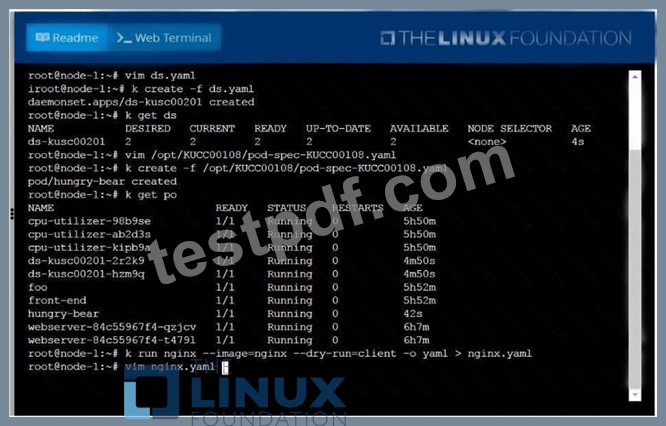
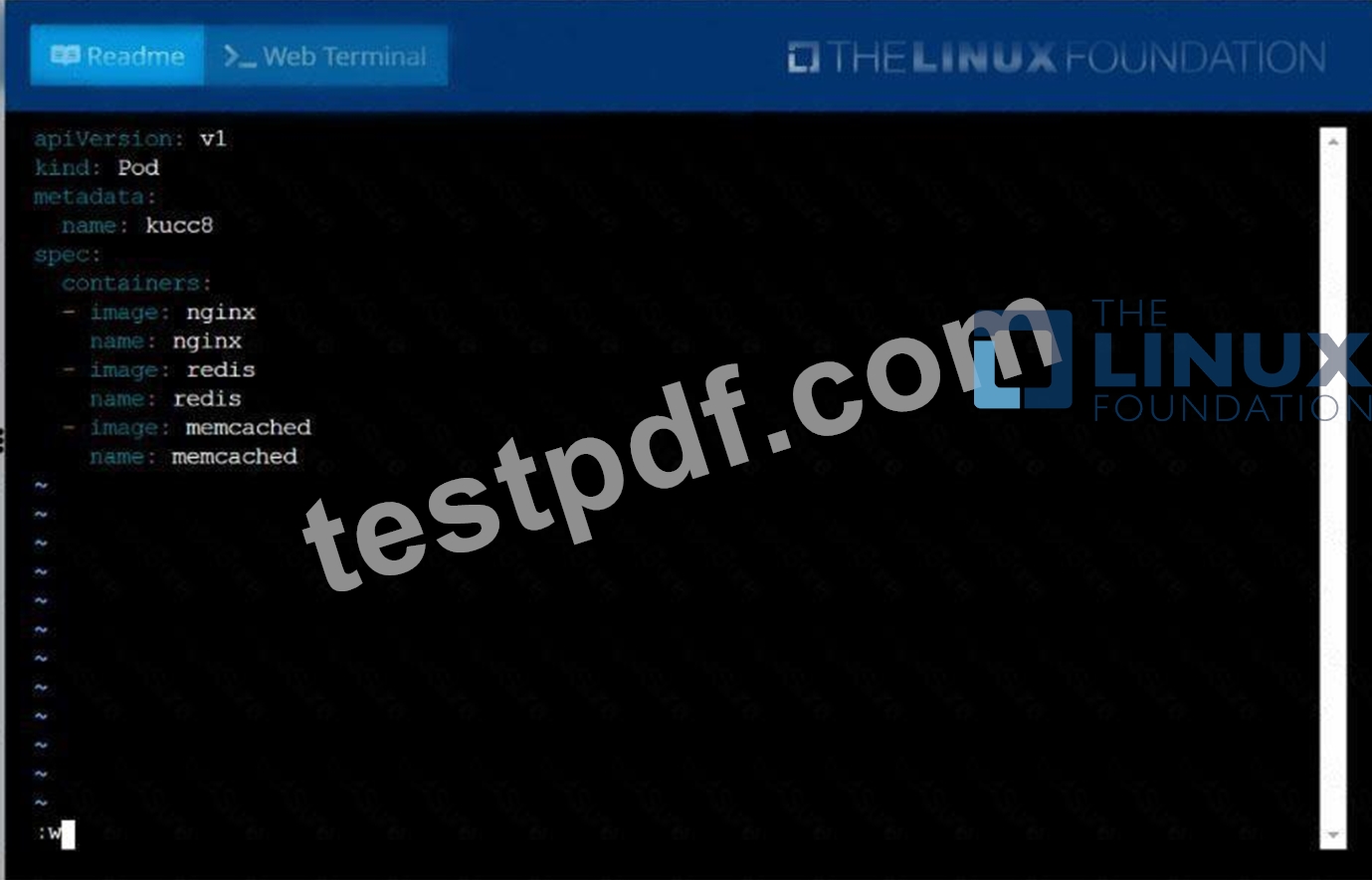
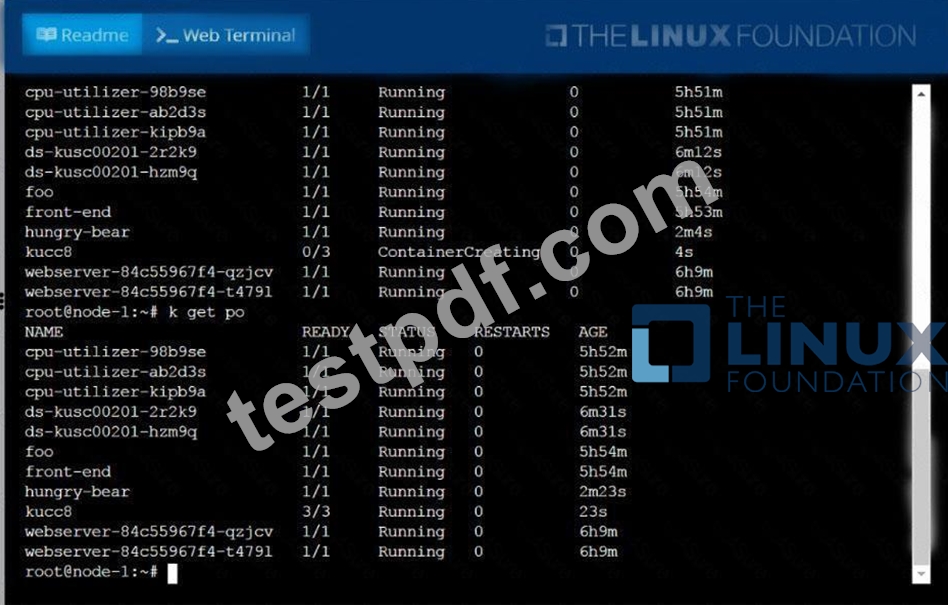
NEW QUESTION 43
Create a redis pod, and have it use a non-persistent storage
Note: In exam, you will have access to kubernetes.io site,
Refer : https://kubernetes.io/docs/tasks/configure-pod-container/configurevolume-storage/
- A. apiVersion: v1
kind: Pod
metadata:
name: redis
spec:
containers:
- name: redis
image: redis
volumeMounts:
- name: redis-storage
mountPath: /data/redis
ports:
- containerPort: 6379
volumes:
- name: redis-storage
emptyDir: {} - B. apiVersion: v1
kind: Pod
metadata:
name: redis
spec:
containers:
- name: redis
image: redis
volumeMounts:
- containerPort: 6379
volumes:
- name: redis-storage
emptyDir: {}
Answer: A
NEW QUESTION 44
View certificate details in /etc/kubernetes/pki
Answer:
Explanation:
// Verify Public Key / Certificate file Openssl x509 -in certificate.crt -noout -text // Verify Private Key Openssl rsa -in "private-key" -check // Verify CSR Openssl req -text -noout -verify
NEW QUESTION 45
Create an nginx pod and load environment values from the above configmap "keyvalcfgmap" and exec into the pod and verify the environment variables and delete the pod
- A. // first run this command to save the pod yaml
kubectl run nginx --image=nginx --restart=Always --dry-run -o
yaml > nginx-pod.yml
// edit the yml to below file and create
vim nginx-pod.yml
apiVersion: v1
name: nginx
envFrom:
- configMapRef:
name: keyvalcfgmap
restartPolicy: Always
kubectl apply -f nginx-pod.yml
// verify
kubectl exec -it nginx -- env
kubectl delete po nginx - B. // first run this command to save the pod yaml
kubectl run nginx --image=nginx --restart=Always --dry-run -o
yaml > nginx-pod.yml
// edit the yml to below file and create
vim nginx-pod.yml
apiVersion: v1
kind: Pod
metadata:
labels:
run: nginx
name: nginx
spec:
containers:
- image: nginx
name: nginx
envFrom:
- configMapRef:
name: keyvalcfgmap
restartPolicy: Always
kubectl apply -f nginx-pod.yml
// verify
kubectl exec -it nginx -- env
kubectl delete po nginx
Answer: B
NEW QUESTION 46
Install a kubernetes cluster with one master and one worker using kubeadm
- A. This is a straightforward question, you need to install kubernetes cluster using kubeadm with one master and one worker.
Refer : https://kubernetes.io/docs/setup/production-environment/tools/kubeadm/ - B. This is a straightforward question, you need to install kubernetes cluster using kubeadm with one master and one worker.
Installation is considered success once both master and worker
nodes become available.
Refer : https://kubernetes.io/docs/setup/production-environment/tools/kubeadm/
Answer: B
NEW QUESTION 47
An Administrator is configuring Authentication Enforcement and they would like to create an exemption rule to exempt a specific group from authentication. Which authentication enforcement object should they select?
- A. default-web-form
- B. default-no-captive-port
- C. default-browser-challenge
- D. default-authentication-bypass
Answer: B
NEW QUESTION 48
List all the pods sorted by name
Answer:
Explanation:
kubect1 get pods --sort-by=.metadata.name
NEW QUESTION 49
Which one is the correct configuration?
- A. @Panorama
- B. &Panorama
- C. $Panorama
- D. #Panorama
Answer: C
NEW QUESTION 50
Watch the job that runs 10 times one by one and verify 10 pods are created and delete those after it's completed
Answer:
Explanation:
kubectl get job -w kubectl get po kubectl delete job hello-job
NEW QUESTION 51
Create a busybox pod and add "sleep 3600" command
Answer:
Explanation:
kubectl run busybox --image=busybox --restart=Never -- /bin/sh -c "sleep 3600"
NEW QUESTION 52
Change the Image version back to 1.17.1 for the pod you just updated and observe the changes
Answer:
Explanation:
kubectl set image pod/nginx nginx=nginx:1.17.1 kubectl describe po nginx kubectl get po nginx -w # watch it
NEW QUESTION 53
......
How much Linux Foundation-CKA: Certified Kubernetes Administrator Cost and Details
Examination Name: Linux Foundation-CKA: Certified Kubernetes Administrator Passing Score: 66% or higher Length of Exam: 120 min Types of questions: Multiple Choice Questions No. of Questions: 24 Questions Examination Fees: $300 USD Retake Exam: Free
New CKA Exam Dumps with High Passing Rate: https://www.testpdf.com/CKA-exam-braindumps.html
CKA Certification Exam Dumps with 63 Practice Test Questions: https://drive.google.com/open?id=1fA8KFcC0EIsPJW2uecdv1A_uKyB6Cvan
